The Studio Death Spiral
Work
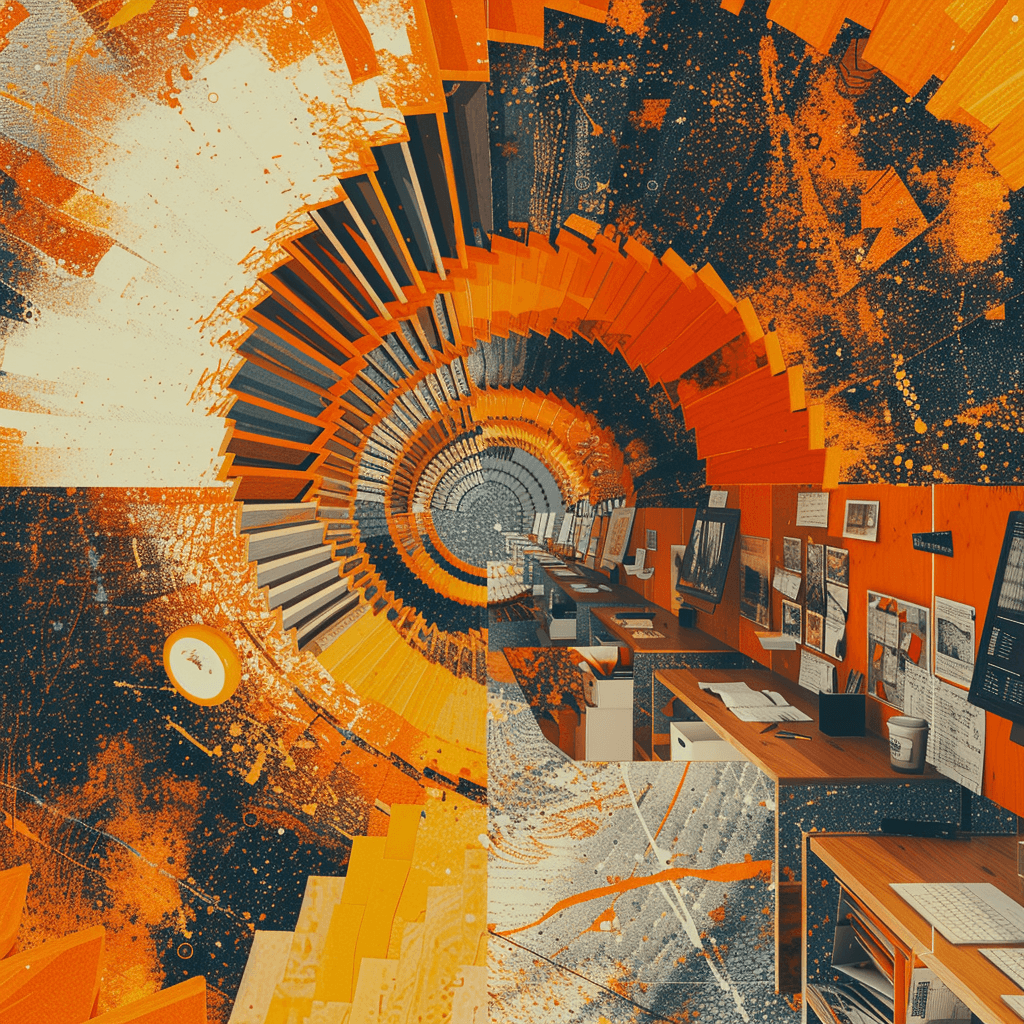
How creative businesses accidentally optimize for everything except creativity?
—
I’ve watched five studios die the exact same death. Each time, I saw it coming months before the founders did.
It always starts with success. A small creative team makes breakthrough work. Clients notice. Revenue grows. Then someone says the magic words: “We need to scale this.”
That’s when the death spiral begins.
The Predictable Pattern
Month 1–6: Pure creative mission. Three to six people in a cramped space. Everyone does everything. Work is raw, personal, breakthrough. Clients pay premium because the output is undeniably different.
Month 7–12: “We need help.” First hire is usually a project manager. “Just to handle the admin stuff so we can focus on creative.” Makes sense. Logical. Fatal.
Month 13–18: The infrastructure builds. Account managers to “manage client relationships.” Process documents to “ensure quality.” Review stages to “catch issues early.” Time tracking to “understand profitability.”
Month 19–24: Meeting about meetings. Founders spend more time explaining creative decisions than making them. Creative reviews have become creative committees. The work starts looking like everyone else’s work.
Month 25–30: Slow death or pivot. Either the studio closes, or it becomes a generic service provider optimizing for efficiency over breakthrough.
I’ve seen this pattern five times. Same sequence. Same good intentions. Same result.
Why Operational Improvements Kill Creativity
Here’s what nobody talks about: creative work and operational efficiency are fundamentally incompatible.
Creative work requires:
Permission to explore dead ends
Time to sit with problems without immediate solutions
Ability to throw away weeks of work when something isn’t right
Emotional space to make irrational decisions
Freedom to obsess over details that don’t affect the bottom line
Operational efficiency requires:
Predictable timelines
Measurable progress
Resource optimization
Logical decision-making processes
Focus on profitable activities
You can’t have both. Every system you add to make the business “better” makes the creative work worse.
The Project Manager Paradox
Project managers are creativity killers, and they don’t mean to be.
Their job is to make things predictable, on time, and efficient. But creativity is inherently unpredictable, timeline-resistant, and inefficient.
When you add a PM, you’re saying: “The most important thing is that we deliver on schedule.” But the most important thing for creative work is that we deliver something that moves people. These are different jobs.
The PM starts asking innocent questions:
“When will this concept be ready for review?”
“How long should the exploration phase take?”
“Can we template this process for future projects?”
Each question pushes the work toward predictability and away from breakthrough.
The Client Services Trap
Account managers seem like obvious additions when client revenue grows. “Someone needs to manage these relationships so creatives can create.”
But here’s what happens: A barrier forms between the creative team and the client. The account manager starts “protecting” creatives from client feedback. They translate requests, filter responses, and manage expectations.
The creative work becomes a game of telephone. The emotional core of what the client actually needs gets lost in professional communication. Projects become about satisfying account managers, not moving end users.
Meanwhile, creatives lose direct connection to the problem they’re solving. The work becomes abstract, disconnected from real human needs.
Process Documentation as Creative Death
“We should document our process so we can repeat our success.”
This sounds smart. It’s actually suicide.
Breakthrough creative work doesn’t come from repeatable processes. It comes from unique responses to specific problems in particular moments with certain people.
The moment you create templates for creative thinking, you’ve guaranteed that every project will look like the last one. Process documentation is creativity fossilization.
Even worse, documented processes become creative crutches. Instead of wrestling with the specific problem in front of them, teams follow the established steps. Original thinking gets replaced by procedural execution.
The Review Stage Multiplication
It starts with one feedback session: “Let’s just make sure we’re all aligned before we present.”
Then it becomes two stages: “We should review concepts internally first, then with the client.”
Then three: “Account manager review, creative director review, then client review.”
Each review stage adds a filter. Each filter removes something essential. The work gets safer, more explainable, more generic with every step.
By the time it reaches the client, the original insight has been focus-grouped into bland acceptability.
When Efficiency Becomes the Enemy
Time tracking tools arrive with promises of insight: “Let’s understand where we’re spending time so we can optimize.”
But creative time isn’t optimizable. The breakthrough might happen in minute one or hour forty-seven. The failed explorations aren’t wasted time—they’re necessary context for the solution that works.
When you start measuring creative hours, people start optimizing for the measurement rather than the outcome. They avoid deep exploration because it looks inefficient. They show progress even when the real progress is internal understanding that can’t be displayed.
The most important creative work—thinking, processing, connecting disparate ideas—becomes invisible and undervalued.
The Space Transformation
Small creative teams usually work in messy, personal spaces. Sketches on walls. Prototypes on desks. Visual references scattered around. It looks chaotic but it’s actually a thinking environment.
As the business grows, someone decides the space needs to be “professional.” Conference rooms for client meetings. Organized storage systems. Clean desks. Proper presentation areas.
The space becomes optimized for impressing visitors rather than generating ideas. The visual chaos that sparked connections gets organized away. The physical environment stops supporting creative thinking.
The Talent Shift
Early teams are usually makers—people who can conceive ideas and execute them. Multi-disciplinary thinkers who move fluidly between strategy and craft.
As the studio grows, roles become specialized. “We need a dedicated strategist.” “We need someone who only does production.” “We need a creative director who doesn’t execute.”
The generalist makers who created the original breakthrough work either get pigeonholed into narrow roles or leave. They’re replaced by specialists who are individually skilled but can’t replicate the integrated thinking that made the work special.
The Financial Pressure Feedback Loop
Operational improvements come with overhead. Project managers, account managers, bigger spaces, more systems—all cost money.
To pay for the overhead, the studio needs more revenue. To get more revenue predictably, they take on safer projects with established clients. Safe projects don’t need breakthrough creative thinking. They need efficient execution.
The business model shifts from “premium pricing for breakthrough work” to “competitive pricing for reliable service.” Creative risk becomes financial risk. Innovation gets optimized away.
The Rare Survivors
A few studios escape the death spiral. They share certain characteristics:
Conscious creative protection. Actively resisting operational “improvements” that would compromise creative output.
Founder creative control. Original creative leaders maintaining decision-making authority over the work.
Small scale maintenance. Growing revenue per person rather than headcount. Intensity over extension.
Client selection discipline. Firing clients who push them toward commodity work, even at financial cost.
Creative metrics. Measuring cultural influence, awards, or transformation alongside financial metrics.
The Web3 Warning Signs
The pattern isn’t limited to traditional agencies. I’m seeing the same death spiral in Web3 creative studios.
They start making boundary-pushing NFT art or experimental token mechanics. Get noticed. Gain traction. Then someone says: “We need to professionalize our operations.”
Soon they’re creating “utility-focused” NFTs and “sustainable tokenomics”—optimizing for market fit rather than creative breakthrough. The work becomes indistinguishable from everyone else’s.
The ones that maintain creative edge actively resist the professionalization pressure, even when it means smaller scale and more chaos.
The Uncomfortable Choice
You can have a creative studio or a well-run business. You usually can’t have both.
Well-run businesses optimize for predictable outcomes, efficient processes, and scalable systems. Creative studios optimize for breakthrough thinking, emotional impact, and cultural relevance.
Most founders try to have both. They want the creative satisfaction and the business optimization. The business optimization always wins because it’s measurable and seems rational.
The studios that survive make a conscious choice: creative output over operational efficiency. They accept being messy, unpredictable, and sometimes inefficient in service of work that actually matters.
The Real Insight
Every operational improvement potentially degrades creative output. Not because operations are evil, but because creativity and efficiency are fundamentally different objectives.
The question isn’t how to balance them. The question is which one you’re optimizing for. Most studios accidentally optimize for everything except the thing that made them special in the first place.
The death spiral isn’t inevitable. But avoiding it requires constantly choosing creative output over business best practices. Most founders aren’t willing to make that choice consistently.