My AI Workflow
Work
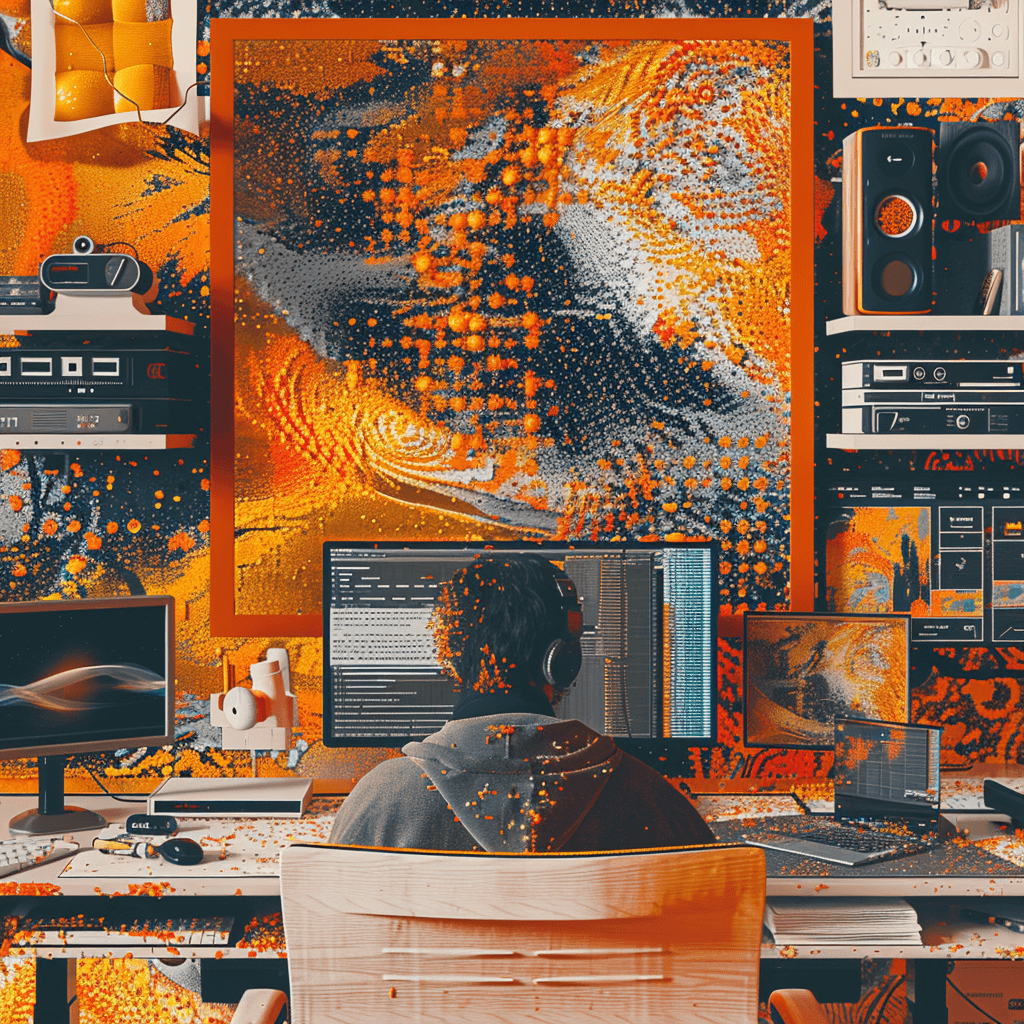
Let me be clear from the start: I use AI for damn near everything I create, build, and think through. Writing, coding, ideation, research, problem-solving, creative exploration - all of it.
If this bothers you, if you want to lecture me about "authenticity" or "losing the human touch," save your breath. This is my space, these are my tools, and this is how I work.
AI generates content. You provide the taste. Your judgment is the asset - @peterdedene
The Authenticity Police Are Missing the Point
Every few weeks, someone pops up in my mentions with the same tired argument: "Using AI isn't authentic. It's cheating. It's not really YOUR work."
These people fundamentally misunderstand what authenticity means in creative work.
Authenticity isn’t about the tools you use. It’s about the problems you choose to solve, the perspectives you bring, and the decisions you make along the way.
A photographer using a digital camera isn’t “less authentic” than one using film. A musician using synthesizers isn’t “cheating” compared to acoustic instruments. A designer using Figma isn’t compromising their creativity compared to hand-drawing mockups.
Tools evolve. The interesting question isn’t whether you use new tools-it’s what you do with them.
My AI Workflow Reality
Here’s how I actually work with AI on a typical project:
Morning ideation: I dump my half-formed thoughts into Claude or GPT, ask it to help me think through problems I’m stuck on, explore angles I haven’t considered.
Research phase: AI helps me synthesize information from multiple sources, identify patterns I might miss, generate questions I should be asking.
Writing process: I use AI as a thinking partner and drafting partner. I give a taste and my information + my personal view/voice + experience to help me refine ideas, restructure arguments, find better ways to express complex thoughts. Note i mentioned everywhere: "Written with AI assistance, edited with human judgment, published with zero apologies"
Creative exploration: When I’m designing or conceptualizing, AI helps me rapidly prototype ideas, explore variations, push concepts in directions I wouldn’t have considered alone.
Technical building: For code, automation, system design—AI accelerates everything. Why would I manually research syntax when I can focus on architecture and logic?
The output is absolutely mine. The decisions, the direction, the taste, the final choices—all human. But the process is augmented as hell, and it makes everything better.
The Productivity Multiplier Effect
People who don’t use AI don’t understand the velocity difference.
I can explore fifty creative directions in the time it used to take me to explore five. I can research complex topics in minutes instead of hours. I can prototype ideas, test concepts, and iterate on solutions at speeds that were impossible before.
This isn’t about being lazy. It’s about being focused on the parts of creative work that actually matter: judgment, taste, strategic thinking, creative direction, human insight.
AI handles the heavy lifting so I can focus on the high-level decisions that determine whether work is breakthrough or boring.
The "Human Touch" Mythology
"But you’re losing the human touch!"
What human touch, exactly? The time I used to spend researching basic information? The hours spent on first drafts that were always going to get completely rewritten anyway? The manual processes that added no creative value?
The human touch isn’t in the grunt work. It’s in the vision, the taste, the ability to know what problems are worth solving, and the judgment to know when something is done.
AI doesn’t replace human creativity. It amplifies human creative capacity by removing the friction between ideas and execution.
The Reputation Fear
Some people worry that using AI will hurt their professional reputation. "What if people find out?" "What if clients think I’m not really doing the work?"
This is backwards thinking rooted in outdated professional norms.
The professionals who adapt to AI first will have massive competitive advantages over those who resist it. They’ll deliver better work faster, explore more possibilities, and solve problems that manual-only workers can’t even approach.
In five years, not using AI will be like showing up to a design job with pencils and paper. Technically possible, but why would you handicap yourself?
The Creative Collaboration Model
I don’t think of AI as a replacement for human creativity. I think of it as the ultimate creative collaborator.
It never gets tired, never has ego conflicts, never dismisses ideas without exploring them. It can help me think through problems from multiple angles, generate variations I wouldn’t consider, and push concepts beyond my initial instincts.
The best creative work I’ve done recently comes from this human–AI collaboration. I bring the vision, taste, and strategic thinking. AI brings processing power, rapid iteration, and perspective augmentation.
Together, we create things neither of us could create alone.
The Speed-to-Market Reality
While people debate the ethics of AI, others are using it to ship faster, explore more deeply, and solve problems at unprecedented speed.
Web3 moves too fast for manual-only workflows. The teams building the most innovative products are all heavily AI-augmented. They’re prototyping faster, iterating quicker, and exploring possibility spaces that would take forever to navigate manually.
If you’re not using AI, you’re not just missing productivity gains. You’re missing entire categories of creative exploration that are only possible with augmented thinking.
The Purist Fallacy
"Real artists don’t need AI. Real creativity comes from struggle and limitation."
This is romantic nonsense.
Every generation of creative tools has faced this same resistance. Digital photography “wasn’t real photography.” Sampling in music “wasn’t real composition.” Computer graphics “weren’t real art.”
The tools change. The fundamental challenge of creative work—having something meaningful to say and finding powerful ways to say it—remains human.
AI doesn’t solve the hard problem of creativity. It just removes barriers to exploring creative solutions.
The Institutional Resistance
Corporate environments and educational institutions are predictably behind on AI adoption. They’re still debating policies while individuals are revolutionizing their workflows.
This creates opportunity. While institutions slowly adapt, individuals who embrace AI tools can move faster, explore more, and create competitive advantages.
The companies that figure out AI-augmented creative processes first will outcompete those stuck in manual-only thinking. The gap is already becoming visible.
The Web3 Connection
Web3 and AI are parallel shifts away from institutional gatekeeping toward individual empowerment.
Just as crypto enables financial sovereignty without traditional financial institutions, AI enables creative and intellectual augmentation without traditional educational or corporate structures.
Both technologies let individuals access capabilities that were previously reserved for large organizations with massive resources.
The people who embrace both are building the future while others debate whether change is happening.
My Actual Standards
I don’t use AI indiscriminately. I have standards for when and how I integrate it:
Use AI for: Research, ideation, first drafts, exploration, technical implementation, rapid prototyping, perspective generation.
Don’t use AI for: Final creative judgment, strategic decisions, taste-making, client relationships, personal voice development, understanding user needs.
Always maintain: Creative vision, quality standards, personal taste, human insight, strategic thinking.
The goal isn’t to replace human creativity but to amplify human creative capacity.
The Future Split
I see creative professionals splitting into two groups:
Group 1: Embraces AI augmentation, develops hybrid workflows, focuses on uniquely human creative challenges while AI handles mechanical tasks.
Group 2: Resists AI adoption, maintains purely manual workflows, falls behind in capability and competitiveness.
Group 1 will create better work, solve harder problems, and build more successful careers. Group 2 will gradually become irrelevant while complaining about authenticity.
The split is already happening. The gap will only grow.
The Bottom Line
I use AI for everything because it makes me more creative, not less.
It helps me explore ideas I wouldn’t have found alone, execute concepts faster than manual processes allow, and focus my human creativity on the problems that actually matter.
If this approach bothers you, that’s fine. You’re welcome to work however you want. But you’re not welcome to lecture me about authenticity while I’m building things you can’t match.
My space, my tools, my results. If you don’t like it, there’s the door.
The future belongs to humans who augment themselves with AI, not to humans who pretend AI doesn’t exist.
Written with AI assistance, edited with human judgment, published with zero apologies.